Choosing reliable Boots Shoe manufacturers requires more than comparing product photos, factory claims, or attractive prices. Global buyers must examine construction quality, material traceability, production capacity, minimum order quantities, testing procedures, and communication speed. A factory may display beautiful Chelsea boots, yet struggle with consistent sizing or delivery during peak season. Details matter.
Christian Louboutin once said, “The shoe is the first thing people subconsciously notice about you.” His observation reflects why buyers should treat boots as both functional products and brand statements. Strong manufacturers understand this balance. They select suitable leather, control stitching tension, reinforce stress points, and test soles against repeated wear. They also maintain documented quality systems and responsible workplace practices.
This guide reviews ten Boots Shoe manufacturers suitable for international buyers. The assessment considers manufacturing experience, export capability, customization, certifications, sample development, and after-sales support. It also looks beyond polished websites. Factory audits, production samples, buyer references, and clear commercial terms often reveal more than marketing language. No ranking is perfect. A supplier that suits a large retailer may disappoint a small emerging brand because its minimum order is too high. Another manufacturer may offer excellent craftsmanship but lack fast freight coordination.
That is the uncomfortable part. A low quotation can conceal expensive revisions, delayed inspections, or inconsistent materials. Buyers should verify every important claim. The shortlist is a practical starting point, not a substitute for due diligence. Reliable sourcing takes patience, direct questions, and occasional skepticism. Good boots begin with good decisions.
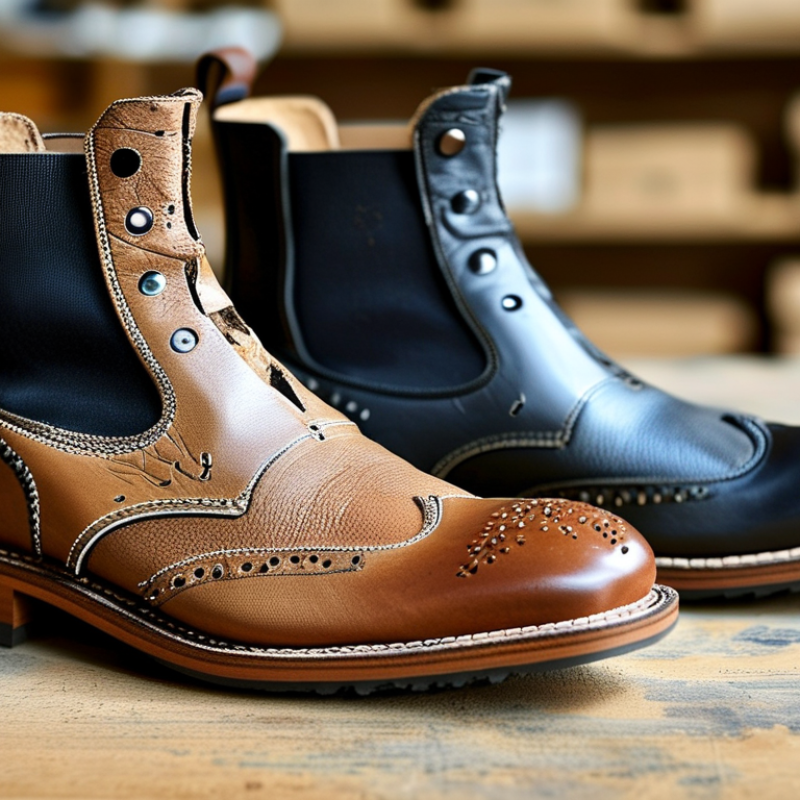
Selecting among the top 10 boots shoe manufacturers requires more than comparing unit prices. The World Footwear Yearbook 2024 reported that global footwear production fell about 6% in 2023, reaching approximately 22.4 billion pairs. This pressure makes capacity, reliability, and cost control essential. Ask manufacturers for recent production records, monthly capacity, minimum order quantities, and realistic lead times. A factory with modern machines may still struggle during peak seasons.
Request material traceability for leather, textiles, rubber, adhesives, and metal parts. Check whether suppliers can provide batch records and testing documents. ISO 9001 certification can indicate a quality system, but it does not guarantee comfortable boots. Inspect stitching density, outsole bonding, heel alignment, and water resistance through independent tests. Small defects become expensive returns. Very quickly.
Environmental and labor controls also need evidence. The OECD Due Diligence Guidance recommends risk-based checks across supply chains, not simple paperwork collection. Review workplace policies, chemical management, wastewater records, and corrective-action reports. A passed audit is useful, but it is not permanent proof. Conditions can change after production starts. Buyers should repeat inspections and compare approved samples with bulk goods.
Commercial terms deserve equal attention. Clarify payment stages, tooling ownership, packaging standards, defect tolerances, and remedies for late delivery.
Ask for a pilot order before committing to large volumes. Some manufacturers answer confidently but provide vague data; that is a warning sign.
A transparent supplier explains limitations, even when the answer is inconvenient.
Leading boots shoe manufacturers for international buyers combine reliable production with clear communication, tested materials, and flexible export support. Experienced suppliers should explain their leather, rubber, textile, and lining sources without vague claims. They should also provide sample pairs with measurable details, including outsole hardness, stitch density, water resistance, and size grading.
A capable factory can manage private-label designs, moderate minimum orders, and seasonal production changes. Buyers should request factory audits, product inspection records, social compliance documents, and shipment references. These checks help confirm capacity rather than relying on polished catalogs. Packaging also matters. Strong cartons, moisture protection, barcode accuracy, and stable pallet loading reduce problems during long sea transport.
Price alone is a weak measure. A cheaper boot may use inconsistent leather or poorly bonded soles. Ask for a full quotation that separates materials, tooling, packaging, and delivery terms. Small details often reveal manufacturing discipline. Still, no supplier is perfect. A successful sample can hide production variation, and certificates may not reflect every shipment. Independent inspections before loading remain valuable. Careful buyers should keep written specifications, approve a sealed reference sample, and review defects after each order. Relationship matters, but records matter more.
Top 10 Boots Shoe Manufacturers for Global Buyers?
Key Product Categories and Manufacturing Capabilities
Global buyers should compare manufacturers by product category, not catalog size. Common lines include hiking boots, work boots, rain boots, winter boots, tactical-style footwear, and casual leather boots. Each category demands different construction choices. Hiking models need flexible midsoles, reinforced toe caps, and deep rubber lugs. Work boots require durable uppers, protective toe options, and slip-resistant outsoles. Rain boots often use molded rubber or waterproof synthetics. Winter styles add insulation, sealed seams, and thicker footbeds.
Manufacturing capability matters more than attractive samples. A capable factory may handle pattern cutting, computerized stitching, lasting, cemented construction, injection molding, and vulcanized soles. Ask whether the same production line can manage leather, microfiber, mesh, and recycled textiles. Check outsole hardness, bonding strength, flex testing, abrasion results, and water penetration records. Small details reveal experience. Uneven stitching often appears near the heel counter. Poorly sealed tongues can leak during ordinary rain.
Reliable suppliers should provide material specifications, inspection reports, production timelines, and traceable batch information. Their sampling process should show measurable changes, not vague promises. I have found that realistic minimum order quantities are more useful than impressive factory claims. No audit is perfect. Buyers should inspect pre-production samples and random finished pairs. Size grading can still drift between batches, especially with complex winter linings. Factories with in-house tooling usually control shape changes faster, but they may charge higher setup fees. Clear communication remains essential when adjusting fit, packaging, or regional compliance requirements.
Top 10 Boots Shoe Manufacturers for Global Buyers?
When comparing the top ten boot manufacturers, inspect quality systems before discussing price. Experienced buyers request material traceability, stitching inspections, and outsole bonding tests. A reliable factory should explain its sampling process clearly. Ask for test reports covering abrasion, flexing, slip resistance, and water penetration. ISO 9001 can indicate controlled production procedures, while ISO 14001 reflects environmental management practices. However, certificates need verification. Paperwork can look perfect while daily control remains weak.
Production capacity requires more than a large factory photograph. Confirm monthly output, active production lines, skilled workers, and peak-season schedules. A manufacturer producing 50,000 pairs monthly may still struggle with your order. Check whether the same lines serve multiple customers. Request a realistic sample timeline, bulk lead time, and replacement process for defective pairs. During an audit, examine cutting tables, stitching stations, curing areas, and finished-goods storage. Small details matter. Dust near adhesive work is not encouraging.
Tips: Ask for recent audit records, not old certificates. Order pilot batches before signing large contracts. Measure size consistency across several cartons. Discuss packaging strength and moisture protection for long-distance shipping. Independent laboratory testing adds confidence, especially for protective or outdoor boots. No factory is flawless. The strongest partner admits weaknesses, records corrective actions, and improves them instead of hiding inconvenient results.
Anonymous market-reference profiles for global buyers; figures represent annual production capacity in million pairs.
Large-scale boot suppliers typically combine ISO 9001 quality management with product testing aligned to ISO 20345 or ASTM F2413 when safety footwear is required. Production capacity is only one screening factor; buyers should also verify audit records, material traceability, social-compliance documentation, laboratory test reports, minimum order quantities, and lead-time performance before qualification.
How to Select the Right Boots Manufacturer for Your Market
Choosing among the top 10 boots shoe manufacturers requires more than comparing prices. According to the World Footwear Yearbook 2024, Asia produced 87.4% of global footwear in 2023. This concentration offers sourcing depth, but quality can vary sharply between factories. Buyers should inspect monthly capacity, material traceability, stitching density, and defect records. Ask for production samples from the same line, not showroom prototypes. A reliable manufacturer should explain lead times clearly and provide test reports for leather, rubber, adhesives, and water resistance.
Market fit matters equally. The right factory understands your climate, customer habits, sizing standards, and retail price. For work boots, verify applicable safety testing, such as ISO 20345 or ASTM F2413, when required by the destination market. For fashion boots, review color consistency, sole flexibility, and packaging durability. The International Trade Centre also highlights footwear’s highly globalized supply chain, making logistics planning essential. A factory near a port may still lose time through poor export coordination. Small details matter.
Tips: Request a pilot order before signing a large contract. Check three production batches, not one. Compare laboratory results with your own inspection. Do not trust polished presentations alone. I have seen attractive samples hide weak heel bonding and uneven sizing. That mistake is expensive. A written quality agreement, inspection schedule, and corrective-action process create stronger accountability. Leave room for improvement; no supplier performs perfectly every season.
| Rank | Manufacturer Profile | Typical Production Hub | Best-Suited Boot Category | Indicative MOQ | Typical Lead Time | Key Capabilities | Compliance and Testing to Request | Best Buyer Fit |
|---|---|---|---|---|---|---|---|---|
| 01 | Large-Scale OEM Factory | East and Southeast Asia | Work boots, hiking boots, casual boots | 5,000–20,000 pairs per style | 60–90 days after approval | High-volume production, automated cutting, multiple assembly lines, private labeling | Material traceability, restricted-substance testing, abrasion and flex testing, social-compliance audit | Global retailers and established importers requiring competitive unit costs |
| 02 | Mid-Size Flexible OEM | South Asia | Leather boots, lifestyle boots, uniform footwear | 1,000–5,000 pairs per style | 45–75 days after approval | Material customization, moderate order flexibility, leather and textile construction | Leather chemical testing, colorfastness, bonding strength, dimensional inspection | Growing brands testing several styles or seasonal collections |
| 03 | European Compliance-Focused Factory | Eastern Europe and Mediterranean Europe | Safety boots, military-style boots, premium work footwear | 500–3,000 pairs per style | 45–75 days after approval | Shorter regional supply chains, technical pattern development, documented quality systems | EN ISO 20345 where applicable, REACH-related chemical controls, CE documentation for regulated PPE | Buyers prioritizing European delivery, documentation, and regulatory control |
| 04 | North American Safety-Footwear Specialist | North America and nearby production regions | Protective-toe, electrical-hazard, and industrial work boots | 1,000–5,000 pairs per style | 60–90 days after approval | Safety construction, durable outsoles, occupational footwear development | ASTM F2413 where applicable, impact and compression tests, slip resistance, electrical-resistance testing | Industrial distributors and buyers selling into regulated workplaces |
| 05 | Waterproof Outdoor-Boot Factory | East Asia and Southeast Asia | Rain boots, trekking boots, hunting and outdoor boots | 500–3,000 pairs per style | 60–90 days after approval | Seam sealing, waterproof membranes, gusseted tongues, molded rubber or EVA outsoles | Water penetration, hydrolysis, flex durability, outsole bonding, cold-temperature performance | Outdoor brands needing weather protection and repeat seasonal production |
| 06 | Injection-Molded PU or PVC Factory | Asia, Eastern Europe, and Latin America | PVC rain boots, agricultural boots, chemical-resistant work boots | 3,000–10,000 pairs per style | 45–75 days after mold approval | Direct injection, molded construction, scalable color and size production | Chemical resistance, slip resistance, cold-flex testing, material composition and migration testing | Agricultural, food-processing, logistics, and low-maintenance footwear channels |
| 07 | Premium Leather and Goodyear-Welt Factory | Europe and selected Asian production centers | Dress boots, heritage boots, premium service boots | 200–1,000 pairs per style | 75–120 days after approval | Goodyear or stitchdown construction, leather finishing, repairable sole systems | Leather grading, flex resistance, stitch strength, colorfastness, sole attachment testing | Premium brands competing on craftsmanship, longevity, and material quality |
| 08 | Fashion-Boot Private-Label Factory | East Asia, South Asia, and Southern Europe | Ankle boots, riding boots, platform boots, seasonal fashion styles | 300–2,000 pairs per style | 45–75 days after sample approval | Rapid sampling, trend-based development, synthetic and leather material options | Heel stability, sole adhesion, color migration, formaldehyde and restricted-substance testing | Online retailers and fashion labels with frequent style turnover |
| 09 | Small-Batch Development Manufacturer | Portugal, Spain, South Asia, and selected Asian hubs | Prototype boots, capsule collections, niche specialty footwear | 100–500 pairs per style | 30–60 days for initial production | Low-volume production, design support, sample iteration, mixed-size orders | Pre-production sample approval, size-set inspection, material and workmanship checks | Start-ups and specialist brands validating demand before scaling |
| 10 | Regional Nearshore Manufacturer | Latin America, North Africa, and Eastern Europe | Work boots, school boots, uniform boots, everyday leather boots | 1,000–5,000 pairs per style | 45–75 days after approval | Shorter transit times, regional material sourcing, flexible replenishment programs | Factory audit, product safety testing, labeling review, packaging and carton testing | Importers seeking lower inventory risk and faster regional replenishment |
: Review recent production records, monthly capacity, minimum order quantities, and realistic lead times. Factory photos are not enough. Peak-season delays can still happen.
Ask about active production lines, worker numbers, monthly output, and peak-season schedules. Check cutting tables, stitching stations, curing areas, and storage rooms. A large factory may still lack available capacity.
Request traceability for leather, textiles, rubber, adhesives, and metal components. Batch records and test documents should match the delivered materials. Missing records deserve careful review.
Request tests for abrasion, flexing, slip resistance, water penetration, and outsole bonding. Inspect stitching density, heel alignment, and size consistency. Comfort still needs physical testing.
No certificate guarantees comfortable boots or consistent daily control. Verify certificates and inspect actual production conditions. Paperwork can look perfect. Conditions may change later.
Review workplace policies, chemical handling, wastewater records, and corrective-action reports. Use risk-based checks across the supply chain. Repeat inspections after production begins.
A pilot order reveals defects, packaging weakness, moisture risks, and size inconsistencies. Compare approved samples with goods from several cartons. Small defects become expensive returns.
Define payment stages, tooling ownership, packaging standards, defect tolerances, and late-delivery remedies. Confirm replacement procedures for defective pairs. Vague answers are warning signs.
Watch for old audit records, unclear capacity data, dusty adhesive areas, and unexplained delays. A trustworthy supplier admits limitations and records corrective actions. No factory is flawless. That matters.
Choosing the right Boots Shoe manufacturer is essential for global buyers seeking reliable quality, competitive pricing, and consistent supply. This article explains how to evaluate manufacturers by examining their production experience, material sourcing, product development capabilities, communication efficiency, and ability to meet international market requirements. It also introduces the main types of boots available, including work boots, outdoor boots, safety footwear, casual styles, and seasonal designs, while highlighting manufacturing flexibility, customization options, and order capacity.
The guide further discusses important quality standards, certifications, inspection procedures, and production capabilities that help buyers reduce supply risks. Finally, it offers practical advice for selecting a suitable manufacturer based on target customers, climate, usage scenarios, budget, minimum order quantities, delivery schedules, and after-sales support. With a structured evaluation process, international buyers can build dependable partnerships and choose a Boots Shoe manufacturer that supports long-term market growth.

Q.L. CODEX